
The Masai Mara is one of Africa’s most remarkable wildlife destinations, famous for its open grasslands, diverse habitats and extraordinary animal populations. From powerful lions and elusive leopards to elephants, giraffes, zebras and wildebeest, the reserve offers unforgettable wildlife encounters. This guide to wild animals in masai mara introduces the species you may discover during a Kenyan safari.
There is much more to the Mara than the famous Big Five. The wild animals in masai mara include large herbivores, smaller antelopes, predators, river-dwelling mammals, reptiles and hundreds of bird species. Each animal plays an important role in maintaining the ecosystem.
Whether you are visiting during the Great Migration or planning a wildlife holiday at another time of year, this wild animals in masai mara checklist will help you recognise the species you encounter. Keep it handy during your game drives and tick off the animals you manage to spot.
1. The Big Five: Famous Wild Animals in Masai Mara
The Big Five are among the most sought-after wild animals in masai mara. The name originally referred to five animals considered particularly challenging to hunt on foot. Today, it describes five iconic African species that many safari travellers hope to see.
Lion
<escape>☐</escape> Lion
Lions are among the most recognisable wild animals in masai mara. They live in social groups called prides and can often be seen resting in the shade, moving through the grassland or watching nearby herds.
Early morning and late afternoon game drives can offer opportunities to observe lions when they are more active. You may see a pride resting together, interacting with cubs or moving across the plains in search of prey.
African leopard
<escape>☐</escape> Leopard
Leopards are solitary, powerful cats with spotted coats and excellent climbing abilities. They are generally more difficult to find than lions because they often rest in trees or remain hidden in thick vegetation.
Look carefully along riverine forests, rocky areas and large tree branches. A leopard resting above the ground is one of the most memorable wild animals in masai mara sightings a visitor can experience.
African elephant
<escape>☐</escape> African elephant
Elephants are among the largest land mammals in the world. In the Mara, they may be seen feeding on vegetation, walking across open grasslands or gathering near water sources.
Watch elephant families carefully to observe how adults protect calves and communicate with one another. Their size and social behaviour make them some of the most fascinating wild animals in masai mara.
African buffalo
<escape>☐</escape> African buffalo
African buffalo are powerful herbivores that often gather in herds. They graze across the grasslands and are an important part of the Mara ecosystem.
Although buffalo may appear calm while feeding, they are unpredictable wild animals. Your guide will maintain a safe distance when observing them.
Black rhinoceros
<escape>☐</escape> Black rhinoceros
The black rhino is one of the most special wild animals in masai mara to encounter. These critically endangered mammals are less frequently seen than elephants or buffalo.
Black rhinos are browsers that feed mainly on leaves, shoots and woody vegetation. Their conservation status and elusive behaviour make a sighting particularly significant.
2. Other Big Cats and Predators
The Mara is famous for its predators. Beyond the Big Five, several carnivores contribute to the ecosystem by hunting prey, scavenging and maintaining natural population balance.
Cheetah
<escape>☐</escape> Cheetah
Cheetahs are built for speed and are often found in open grasslands where they can spot potential prey. Their distinctive black tear marks run from the eyes towards the mouth.
Unlike lions, cheetahs generally hunt alone or in small family groups. They are among the wild animals in masai mara that photographers particularly enjoy observing in open landscapes.
Spotted hyena
<escape>☐</escape> Spotted hyena
At Drunken Elephant Mara
Stay and do this at the camp
20 rooms under canvas in natural forest, about two kilometres from Sekenani Gate.
Experience
Game drives
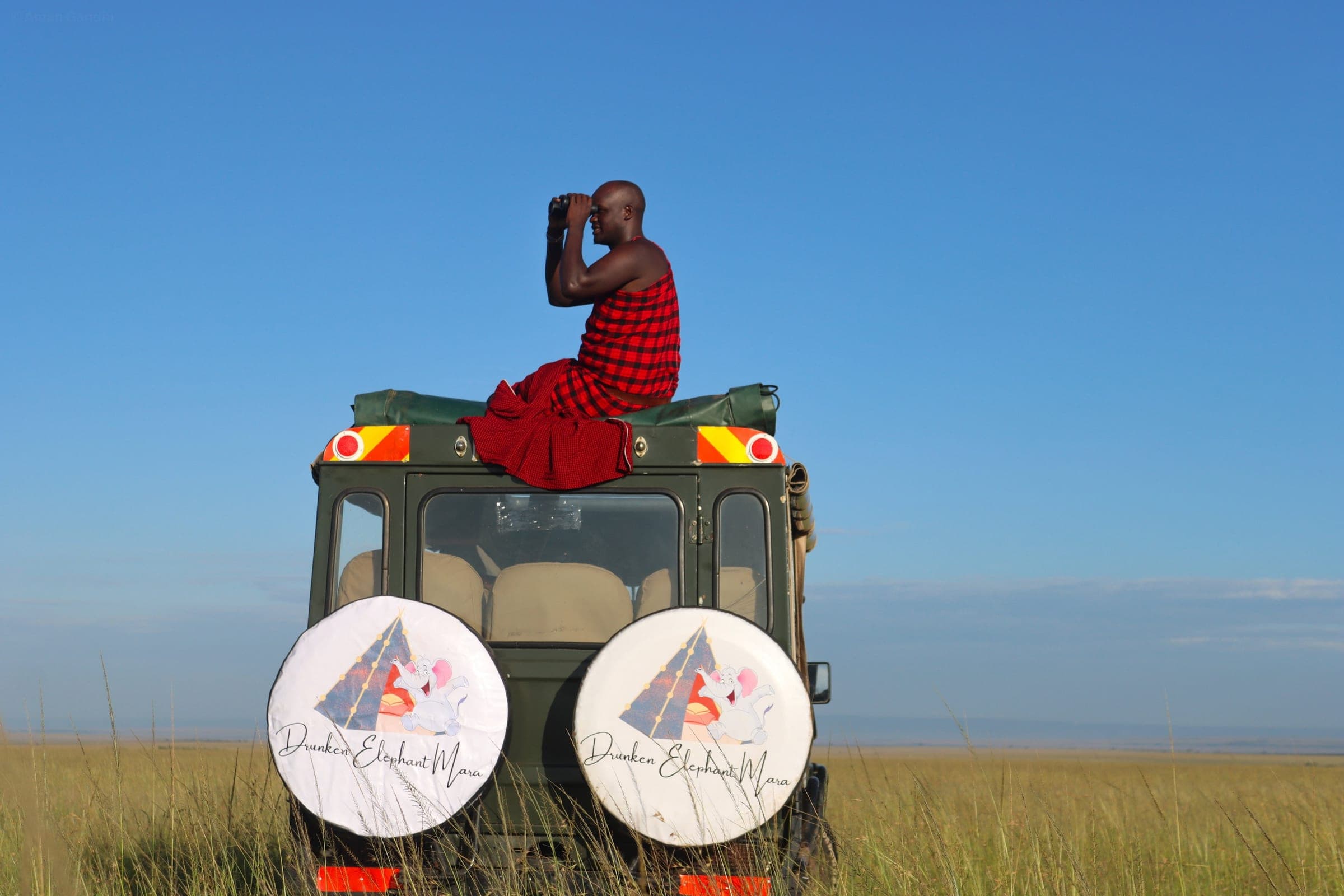
Morning, afternoon and full-day drives into the Maasai Mara in search of the big five.
View
Experience
Guided nature walks
The bush at walking pace: tracks, plants and birdlife, with a guide.
View
Stay · Sleeps 4
Two-Bedroom Family Tent
Two bedrooms under one roof, with a sitting room, fireplace and outdoor deck.
View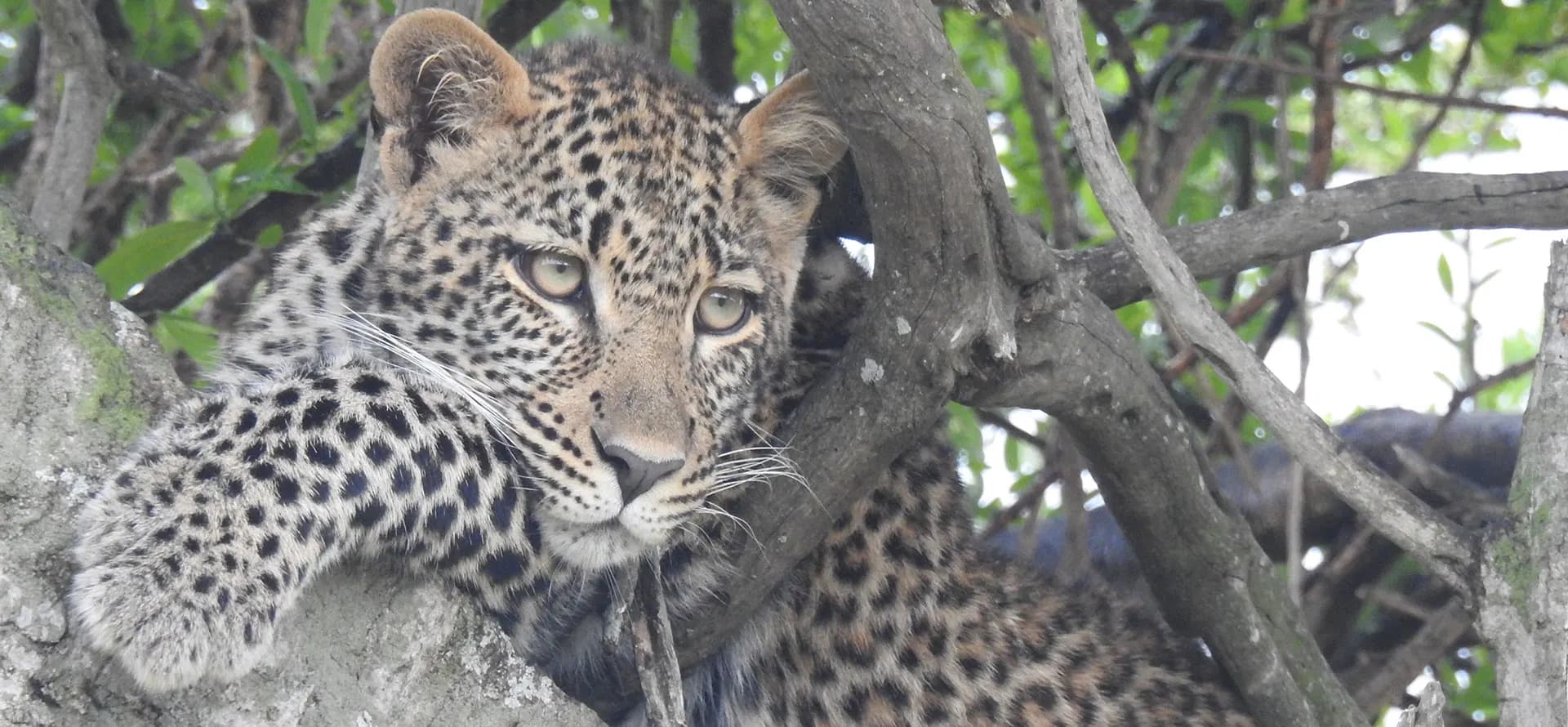
Safari · 3 nights / 4 days
Maasai Mara — 3 Nights
Two full days in the Mara by road from Nairobi, with a visit to a nearby Maasai village.
View
Spotted hyenas are intelligent social carnivores that live in structured clans. They hunt as well as scavenge, making them important members of the Mara food chain.
Their distinctive whooping calls may be heard after dark. During game drives, you may see them moving through the grasslands or resting near their dens.
Jackals
<escape>☐</escape> Black-backed jackal
<escape>☐</escape> Side-striped jackal
Jackals are smaller members of the dog family. Their varied diet includes small mammals, insects, birds and carrion.
These wild animals in masai mara are sometimes overlooked by visitors concentrating on larger predators. Observing their movements and interactions can make a game drive even more interesting.
Serval
<escape>☐</escape> Serval
The serval is a medium-sized wild cat with long legs, large ears and a spotted coat. It uses its excellent hearing to locate small prey in the grass.
Servals are not always easy to find, but their distinctive appearance makes them exciting animals to encounter.
African wild dog
<escape>☐</escape> African wild dog
African wild dogs are highly social predators that live and hunt in packs. They use teamwork and coordinated movements when pursuing prey.
They are uncommon sightings in the Mara, so encountering them is a special experience. They are among the wild animals in masai mara that should never be assumed to appear on a particular safari.
3. Great Migration Animals and Large Grazers
The Mara’s grasslands support large populations of grazing animals. These herbivores are some of the most frequently encountered wild animals in masai mara and form an important part of the food chain.
Wildebeest
<escape>☐</escape> Wildebeest
Wildebeest are closely associated with the Great Migration. Large herds move through the wider Serengeti-Mara ecosystem in search of fresh grazing and water.
The migration is a natural movement rather than a scheduled event. The number of wildebeest in the Mara changes throughout the year, so sightings depend on seasonal movements and local conditions.
Plains zebra
<escape>☐</escape> Plains zebra
Zebras are recognised by their distinctive black-and-white stripes. They often graze alongside wildebeest and other herbivores.
Their presence adds to the variety of wild animals in masai mara. Zebra herds are particularly interesting to watch when they move across the open plains or gather near water.
Maasai giraffe
<escape>☐</escape> Maasai giraffe
The Maasai giraffe has irregular, jagged-edged coat markings. It feeds on leaves from trees and shrubs, using its long neck and tongue to reach vegetation.
Look for giraffes browsing across the plains or moving between scattered trees. They are among the most recognisable wild animals in masai mara.
Eland
<escape>☐</escape> Common eland
The common eland is Africa’s largest antelope. Despite its size, it can move surprisingly quickly. Elands feed on grasses, leaves and other vegetation.
Topi
<escape>☐</escape> Topi
Topis are medium-to-large antelopes with reddish-brown coats and darker markings. They are often seen standing on termite mounds, where they can observe their surroundings.
Warthog
<escape>☐</escape> Common warthog
Warthogs have distinctive facial tusks and often feed while kneeling on their front legs. They may also be seen running with their tails held upright.
These unusual-looking animals are a familiar part of the Mara’s grassland wildlife.
4. Antelopes and Gazelles to Look For
A wildlife checklist would not be complete without the Mara’s diverse antelope population. These grazing animals are an important food source for predators and a major part of the wild animals in masai mara experience.
Look out for the following species:
- <escape>☐</escape> Thomson’s gazelle: A small, fast antelope with a distinctive dark stripe along its side.
- <escape>☐</escape> Grant’s gazelle: Larger than Thomson’s gazelle, with a pale coat and curved horns.
- <escape>☐</escape> Impala: An agile antelope known for its impressive leaps.
- <escape>☐</escape> Waterbuck: A large antelope often associated with areas close to water.
- <escape>☐</escape> Hartebeest: Recognisable by its long face and unusual horn shape.
- <escape>☐</escape> Bushbuck: A shy antelope more likely to be found around thicker vegetation.
- <escape>☐</escape> Kirk’s dik-dik: A very small antelope that usually stays close to cover.
- <escape>☐</escape> Klipspringer: A compact antelope adapted to rocky terrain.
- <escape>☐</escape> Lesser kudu: A striped antelope that is uncommon and difficult to spot.
- <escape>☐</escape> Oribi: A small, slender antelope associated with open grassland.
These smaller wild animals in masai mara deserve attention too. Although they may not receive the same attention as lions and elephants, they contribute significantly to the ecosystem’s biodiversity.
5. Hippos and Crocodiles: Animals Around the Mara River
The Mara River and other waterways support some of the most fascinating wild animals in masai mara. These habitats provide water, shelter and feeding opportunities for several species.
Hippopotamus
<escape>☐</escape> Hippopotamus
Hippos spend much of the day in water, where they keep their bodies cool. They usually emerge to graze after sunset or during the night.
You may see groups gathered in river pools, with only their eyes, ears and nostrils visible above the water. Hippos are powerful animals and should always be observed from a safe distance.
Nile crocodile
<escape>☐</escape> Nile crocodile
Nile crocodiles are large reptiles found in rivers and other suitable water habitats. They are particularly well known for their presence along some migration crossing points.
When wildebeest and zebra cross the Mara River, crocodiles may be present. However, river crossings are unpredictable, and visitors should never expect a particular crossing or predator encounter to happen on schedule.
6. Birds of the Masai Mara
Birdlife adds another dimension to the wild animals in masai mara experience. The reserve and surrounding ecosystem support a wide variety of birds, from large raptors to colourful smaller species.
Add these birds to your checklist:
- <escape>☐</escape> Maasai ostrich: A large flightless bird commonly associated with open country.
- <escape>☐</escape> Secretary bird: A long-legged bird of prey that hunts on the ground.
- <escape>☐</escape> Lilac-breasted roller: A colourful bird often seen perched in open woodland.
- <escape>☐</escape> African fish eagle: A striking raptor associated with rivers and wetlands.
- <escape>☐</escape> Kori bustard: One of the heaviest flying birds, often found in grassland.
- <escape>☐</escape> Marabou stork: A large scavenging bird with a distinctive appearance.
- <escape>☐</escape> White-backed vulture: A scavenger that plays an important role in the ecosystem.
- <escape>☐</escape> Grey crowned crane: An elegant bird with a golden crown of feathers.
- <escape>☐</escape> Pied kingfisher: A black-and-white bird often seen hovering above water.
- <escape>☐</escape> Southern ground hornbill: A large ground-dwelling bird with a distinctive call.
Bring binoculars if you enjoy identifying birds. Some species are easier to observe from a distance, and a guide can help identify birds that are unfamiliar to you.
7. Smaller and More Elusive Wild Animals
Not all wild animals in masai mara are easy to find. Some are nocturnal, naturally shy or associated with habitats that safari vehicles do not frequently enter.
Keep an eye out for these less commonly seen mammals:
- <escape>☐</escape> Aardvark: A nocturnal mammal that feeds mainly on ants and termites.
- <escape>☐</escape> Ground pangolin: A highly elusive, scale-covered mammal that feeds on ants and termites.
- <escape>☐</escape> Bat-eared fox: A small canid with large ears, adapted to locating insects.
- <escape>☐</escape> Caracal: A secretive wild cat with distinctive black ear tufts.
- <escape>☐</escape> Honey badger: A strong, resourceful mammal known for its tough nature.
- <escape>☐</escape> Genet: A slender, often nocturnal mammal with a spotted or mottled coat.
- <escape>☐</escape> Aardwolf: A shy relative of hyenas that feeds mainly on termites.
- <escape>☐</escape> Porcupine: A nocturnal rodent with sharp protective quills.
- <escape>☐</escape> Banded mongoose: A social mammal that forages in groups.
- <escape>☐</escape> African wildcat: A small wild feline that resembles a domestic cat.
These less frequently seen wild animals in masai mara make the ecosystem even more fascinating. Some may be difficult to encounter during ordinary daytime game drives, and sightings should never be guaranteed.
For more unusual wildlife encounters, read our guide to rare animals you might spot in the Masai Mara.
8. How to Spot More Wild Animals in the Masai Mara
Seeing a wide variety of wild animals in masai mara involves more than driving around and hoping for a sighting. Preparation, patience and knowledgeable guidance can make your safari more rewarding.
Choose experienced safari guides
A knowledgeable guide understands animal behaviour, habitats and tracks. They can help you recognise species that might otherwise be missed and explain the relationships between predators and prey.
Go on early morning and late afternoon drives
Many animals are active during the cooler parts of the day. Early morning and late afternoon drives can provide good opportunities to observe predators and herbivores.
Spend enough time in the reserve
A longer stay gives you more opportunities to explore different habitats and observe animal behaviour. Wildlife sightings are never guaranteed, but patience can make a significant difference.
Carry binoculars
Binoculars are useful for identifying birds, distant antelopes and animals resting in vegetation. They also allow you to observe wildlife without asking your driver to approach too closely.
Explore different habitats
Open grasslands, riverbanks, woodland and areas with thicker vegetation support different species. Exploring a variety of habitats can increase the range of wild animals in masai mara you encounter.
Follow responsible wildlife-viewing practices
Always remain inside the safari vehicle unless your guide confirms that leaving it is permitted and safe. Keep a respectful distance, avoid loud noises and never pressure a driver to approach or disturb an animal.
9. Experience Wild Animals in Masai Mara on a Game Drive
A game drive is one of the best ways to discover the wild animals in masai mara. With an experienced guide, you can search for predators, follow herds of herbivores and learn about the relationships between different species.
During your safari, you may encounter lions resting in the grass, elephants moving across the plains, giraffes feeding on trees or hippos gathered in the river. Every drive is different, which makes each outing an opportunity to discover something new.
Our Masai Mara game drives provide a way to explore the reserve and look for its diverse wildlife. A guided drive can also help you understand the behaviour and habitats of the animals you encounter.
When searching for wild animals in masai mara, remember that a successful game drive is not simply about how many species you tick off. Spending time observing an animal’s behaviour can be more rewarding than rushing from one sighting to another.
10. Plan Your Masai Mara Wildlife Safari
The wild animals in masai mara are among the main reasons travellers visit Kenya. From the Big Five and Great Migration herds to colourful birds and elusive smaller mammals, the ecosystem offers a remarkable variety of wildlife experiences.
A good safari gives you time to appreciate the landscape, learn about animal behaviour and enjoy responsible wildlife viewing. You may not see every species on this checklist, but every encounter can provide a memorable experience.
If you are planning a visit, explore our Masai Mara safari experiences and start planning an itinerary suited to your interests.
Discover the wild animals in masai mara with Safari Boyz and experience the wildlife, landscapes and unforgettable encounters that make Kenya special.
Frequently Asked Questions About Wild Animals in Masai Mara
1. What wild animals can you see in the Masai Mara?
The wild animals in masai mara include lions, leopards, elephants, buffalo, black rhinos, cheetahs, hyenas, giraffes, zebras, wildebeest, hippos, crocodiles, antelopes and many bird species. The animals you see depend on your location, the season and conditions during your safari.
2. Can you see the Big Five in the Masai Mara?
Yes. All five Big Five species occur in the Masai Mara: lion, leopard, elephant, buffalo and black rhinoceros. However, sightings are not guaranteed, and black rhinos and leopards can be particularly elusive.
3. What is the best time to see wild animals in the Masai Mara?
Wildlife viewing is possible throughout the year. The Great Migration generally brings large herds of wildebeest and zebra into the Mara around July to October, although timing varies. Resident wild animals in masai mara can be seen outside the migration period too.
4. Are there giraffes in the Masai Mara?
Yes. Maasai giraffes are found in the Mara ecosystem. Visitors may see these wild animals in masai mara browsing on trees or walking across the grasslands.
5. Are there crocodiles in the Masai Mara?
Yes. Nile crocodiles live in the Mara River and other suitable water habitats. They are particularly well known for their presence along some wildebeest migration crossing points.
6. Are rare animals easy to see in the Masai Mara?
No. Animals such as pangolins, aardvarks, caracals and African wild dogs are difficult to encounter. Some are nocturnal or naturally elusive, so sightings are uncommon and never guaranteed.
7. How can I see more wild animals in the Masai Mara?
Choose an experienced guide, allow enough time for game drives, explore different habitats and remain patient. Early morning and late afternoon drives can be productive, but wildlife activity varies.
8. Is the Masai Mara suitable for birdwatching?
Yes. The Mara ecosystem supports diverse birdlife, including ostriches, secretary birds, rollers, eagles, vultures, storks and kingfishers. Binoculars can make birdwatching more rewarding.
9. Can visitors get out of the safari vehicle to see animals?
Visitors should remain inside the vehicle during ordinary game drives unless their guide confirms that leaving it is permitted and safe in a designated area. Never approach, feed or disturb wild animals.
Questions and answers
1. What wild animals can you see in the Masai Mara?
The wild animals in masai mara include lions, leopards, elephants, buffalo, black rhinos, cheetahs, hyenas, giraffes, zebras, wildebeest, hippos, crocodiles, antelopes and many bird species. The animals you see depend on your location, the season and conditions during your safari.
2. Can you see the Big Five in the Masai Mara?
Yes. All five Big Five species occur in the Masai Mara: lion, leopard, elephant, buffalo and black rhinoceros. However, sightings are not guaranteed, and black rhinos and leopards can be particularly elusive.
3. What is the best time to see wild animals in the Masai Mara?
Wildlife viewing is possible throughout the year. The Great Migration generally brings large herds of wildebeest and zebra into the Mara around July to October, although timing varies. Resident wild animals in masai mara can be seen outside the migration period too.
4. Are there giraffes in the Masai Mara?
Yes. Maasai giraffes are found in the Mara ecosystem. Visitors may see these wild animals in masai mara browsing on trees or walking across the grasslands.
5. Are there crocodiles in the Masai Mara?
Yes. Nile crocodiles live in the Mara River and other suitable water habitats. They are particularly well known for their presence along some wildebeest migration crossing points.
6. Are rare animals easy to see in the Masai Mara?
No. Animals such as pangolins, aardvarks, caracals and African wild dogs are difficult to encounter. Some are nocturnal or naturally elusive, so sightings are uncommon and never guaranteed.
7. How can I see more wild animals in the Masai Mara?
Choose an experienced guide, allow enough time for game drives, explore different habitats and remain patient. Early morning and late afternoon drives can be productive, but wildlife activity varies.
8. Is the Masai Mara suitable for birdwatching?
Yes. The Mara ecosystem supports diverse birdlife, including ostriches, secretary birds, rollers, eagles, vultures, storks and kingfishers. Binoculars can make birdwatching more rewarding.
Can I do a hot-air balloon safari or ride a horse?
Yes. Balloons lift off at dawn and drift over the plains for about an hour, ending with a bush breakfast — flights are run by licensed operators and booked as an extra. Guided nature walks and horse rides for suitable riders happen outside the reserve, where walking and riding are allowed.